
















Table of Contents
- • VideoGen Review Summary
- • About VideoGen
- • Other opinions about VideoGen
- • VideoGen Company Overview
- • How VideoGen’s AI Workflow Operates in Practice
- • VideoGen Pro Plan: Individual Creator Tier review
- • VideoGen Business Plan: Priority Access Tier review
- • VideoGen Enterprise Plan: Custom Structure review
- • VideoGen Pros & Cons Analysis
- • VideoGen Subscription Model
- • Who VideoGen Is Designed For?
- • VideoGen Subscription Cancellation and Refund Terms
- • VideoGen Service Access
- • Contact & Support Channels
- • VideoGen vs Other AI Video Creation Platforms
- • What Users Commonly Say About VideoGen
- • Where to buy VideoGen?
- • Conclusion of VideoGen reviews & ratings
VideoGen Review Summary
VideoGen operates as a browser-based AI video creation platform within the broader Software landscape, structured around automated scripting, media sourcing, and voice generation. It generally performs well for rapid marketing and training drafts, particularly when turnaround speed is prioritized. At the same time, dynamic usage limits and AI-selected visuals mean outcomes can vary depending on volume and oversight.
Highlights
- Audience Fit: Designed for marketers, educators, and small teams producing recurring explainer or social content; less suited to projects requiring detailed frame-by-frame editing or regulated data environments.
- Scope or Offering: Web-based AI workflows combining automated storyboarding, multilingual voiceovers, tiered subscription access, and structured commercial-use permissions.
- Balanced Consideration: The automation model accelerates production, but dynamic fair-use thresholds and variable media matching require realistic expectations.
- Overall Evaluation & Score: 78/100 — Efficient and accessible within its automation tier, moderated by transparency constraints and performance variability under heavier workloads.
Within a competitive AI video ecosystem that includes editing-centric and avatar-specialized tools, the platform positions itself as a scalable drafting engine rather than a cinematic studio replacement. Structural governance and operational context are further detailed in the VideoGen review, which supports informed comparison.
About VideoGen
Producing a polished marketing video used to mean juggling scripts, stock libraries, voiceover tools, and editing software, often across multiple tabs and subscriptions. For small teams and solo creators, that workflow can slow momentum and inflate costs before a single clip is published.
VideoGen is a browser-based AI video generator designed to compress that process into a guided workflow. It combines automated storyboarding, media sourcing, and text-to-speech inside one platform, positioning itself as a faster alternative to traditional video editing suites.
The platform reports being trusted by 5+ million users and highlights enterprise-facing adoption signals across marketing and education sectors. Public review data shows a mixed but active user base, indicating meaningful real-world usage rather than early-stage experimentation.
If you’re exploring whether automation can realistically replace parts of your production workflow, this VideoGen Review breaks down how the system performs in daily use, where it accelerates output, and what level of control you should expect. It is generally best suited for teams prioritizing rapid content drafts over meticulous frame-by-frame editing.
Other opinions about VideoGen
Opinions and insights gathered from trusted review articles and authoritative websites covering VideoGen.
VideoGen Company Overview
VideoGen is a U.S.based software company operating as VideoGen, Inc., with a registered office in San Francisco, California. The platform functions as a browser-based artificial intelligence video generation service within the broader AI video software category. Structured as a subscription SaaS business, it provides web-based access to automated video creation tools without requiring desktop installation.
The company presents itself as AI-first, building its platform around large language and generative media models to automate scripting, media sourcing, and narration workflows. Its stated objective centers on simplifying video production through integrated automation rather than traditional timeline editing systems. Over time, the service has expanded from basic AI video assembly into tiered plans that include team workspaces, generative video clips, and licensed stock integrations.
Operationally, VideoGen distributes its services globally through a web application, offering subscription tiers for individual users, businesses, and enterprise clients. Commercial use rights are included within paid plans, while usage operates under dynamic fair-use limits tied to AI compute availability. Legal governance is based in the United States, with terms outlining arbitration procedures, licensing boundaries, and compliance exclusions for certain regulated industries.
How VideoGen’s AI Workflow Operates in Practice
From a simple idea or prompt, the platform moves through AI-assisted scripting, automated storyboarding, media sourcing, voice generation, and final export within a browser-based environment. Rather than centering on a traditional timeline editor, it relies on AI agents and structured automation to assemble draft-ready videos quickly.
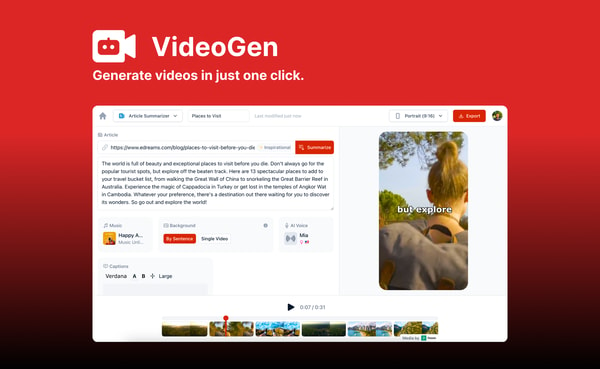
The system is designed around accessibility and speed. Its browser-based editor requires no installation, and tier-dependent features such as generative clips and collaborative workspaces support both individual creators and teams. By combining stock sourcing, text-to-speech in multiple languages, and structured scene building, VideoGen positions itself as an automation-first production tool rather than a manual editing suite.
VideoGen Highlights & Features:
- Browser-based AI video editor
- Automated storyboarding and media sourcing
- Tier-based generative clip access
- Team workspace collaboration
- Multilingual text-to-speech integration
This overview offers a snapshot of how VideoGen structures its AI-driven production flow. The next section takes a closer look at output quality and performance consistency to better understand how these automated processes translate into finished results.
VideoGen Pro Plan: Individual Creator Tier review
The Pro Plan is structured for solo creators, educators, and marketers producing recurring short-form videos. It includes fair-use “unlimited” AI generation governed by dynamic usage limits, making it suitable for consistent content output without fixed credit tracking. In practice, the plan emphasizes speed, accessibility, and cost efficiency, particularly for users working within a browser-based workflow.
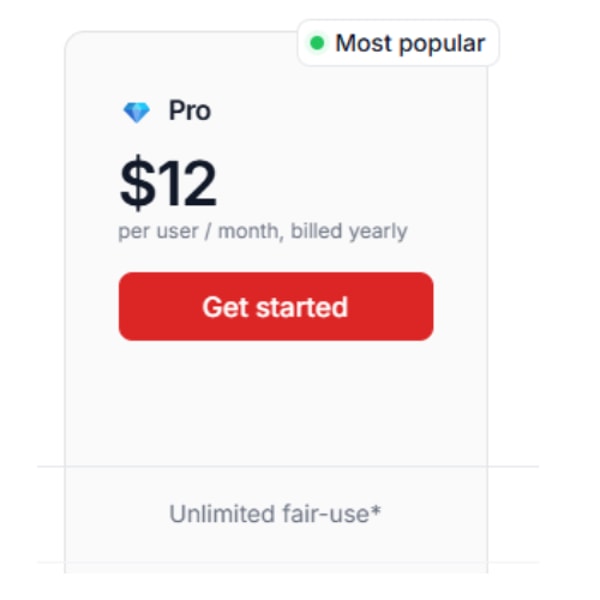
From a structural standpoint, the tier provides 50GB of storage, standard AI priority access, and excludes generative video clips, AI avatars, and iStock downloads. This positions it as entry-to-mid automation rather than a full-feature production environment.
For individuals focused on streamlined AI-assisted drafting rather than expanded media licensing or avatar tools, the configuration reflects a balanced creator-oriented setup.
Price $12 • videogen.io
VideoGen Business Plan: Priority Access Tier review
The Business Plan is structured for higher-volume teams that require faster processing speeds and expanded AI capabilities. It introduces priority AI access, generative video clips, AI avatars, and 50 monthly iStock downloads, positioning it as a feature-enhanced tier compared to the individual plan. This configuration supports teams producing recurring content at scale while integrating licensed stock assets directly into the workflow.

From an infrastructure standpoint, the plan includes 500GB of storage and priority compute allocation, improving throughput during active production cycles. It does not include a dedicated account manager, and overall cost exposure increases relative to lower tiers. Although scalability expands, AI usage remains governed by dynamic limits rather than fixed public credit caps.
Price $74 • videogen.io
VideoGen Enterprise Plan: Custom Structure review
The Enterprise Plan is structured for organizations that require customized usage parameters and coordinated account oversight. Rather than expanding creative toolsets alone, it introduces custom AI limits, a dedicated account manager, and priority support to support operational scale and internal governance. This tier is designed for teams managing higher output volumes or multi-user environments that benefit from structured oversight.

Access is based on custom pricing, contractual agreements, and negotiated storage and compute allocations, reflecting a sales-led engagement model instead of self-serve scalability.
Storage levels and AI access thresholds are defined through formal agreements, allowing organizations to align platform usage with internal workflows. Suitability depends on operational complexity and the need for account-level coordination.
Check Price • videogen.io
VideoGen Pros & Cons Analysis
VideoGen centers its value proposition on automation, allowing users to move from idea to draft video with minimal manual assembly. The browser-based structure, built-in multilingual voice generation, and integrated stock options make it accessible for creators and teams who prioritize speed and streamlined production.
At the same time, usage governance and infrastructure play a visible role in overall performance. Dynamic fair-use limits, server-dependent processing, and variability in AI-selected visuals shape how consistently outputs meet expectations.
Understanding these structural factors helps set realistic production workflows rather than assuming uniform performance across all use cases.
- • Rapid AI-driven video generation
- • Browser-based platform access
- • Multilingual text-to-speech integration
- • Commercial use rights in paid tiers
- • Tiered plans for individuals and teams
- • iStock integration in Business tier
- • Team workspace support
- • Dynamic fair-use limits without fixed caps
- • Non-refundable purchases
- • Variability in AI-selected visuals
- • Server-dependent performance variability
VideoGen Subscription Model
After evaluating output quality, the financial structure becomes central to understanding how VideoGen operates over time. The platform follows a subscription-based model with monthly and annual billing options, including discounted yearly plans.
Access is organized across Pro, Business, and Enterprise tiers, each with different storage allocations and levels of AI processing priority. VideoGen’s architecture is built around dynamic AI usage governance rather than fixed public credit caps.
Higher tiers receive priority compute allocation, and usage may adjust during periods of peak demand. Annual billing options and clearly defined subscription terms shape how ongoing access is managed across individual and organizational accounts.
Who VideoGen Is Designed For?
The platform is primarily geared toward marketers, content creators, educators, trainers, and small businesses that need to generate videos efficiently at scale. Its automation-driven system focuses on transforming prompts into structured video drafts rather than offering cinematic, frame-by-frame editing control.
VideoGen’s broader value lies in its automation-centric design. By combining AI scripting, stock sourcing, multilingual voiceovers, and browser-based production tools, it supports recurring social content, internal training modules, and draft-level explainer videos within a unified workflow. The overall service range emphasizes speed, accessibility, and structured collaboration over manual editing depth.
VideoGen Subscription Cancellation and Refund Terms
As part of evaluating platform governance, it is important to understand that VideoGen manages account access through an automatically renewing subscription model. This means that access to the platform continues seamlessly across all plan tiers unless the user explicitly cancels their subscription.
Furthermore, there is no specified refund window; instead, any cancellation made will only become effective at the end of the current billing term, maintaining the standard billing cycle until that date
Regarding fees and conditions, all purchases made on the platform are strictly non-refundable, and there are no stated exclusions that allow for retroactive refunds. To successfully terminate an auto-renewing subscription and prevent future charges, users must complete the cancellation process directly through their account dashboard or by reaching out via the official contact email.
VideoGen Service Access
As a cloud-based AI video platform, the service offers global, web-based access that is entirely digital and untethered from physical distribution. Users bypass lengthy setup processes and enjoy immediate access the moment their subscription is activated. This streamlined structure ensures that you can begin generating content as soon as your account is live.
The platform operates entirely through a web browser, allowing all creation, editing, and export processes to occur within an online interface without any software installation. However, performance and access are subject to dynamic AI compute availability and fair-use limits.
Because the platform relies on server infrastructure rather than physical logistics, consistent server uptime plays a central role in delivering a reliable user experience.
Contact & Support Channels
• Email: [email protected] (general inquiries)
• Support: [email protected]
• Address: 548 Market St PMB 46882, San Francisco, CA 02111, United States
• Demo booking form for business inquiries
VideoGen vs Other AI Video Creation Platforms
VideoGen emphasizes automated video assembly, allowing users to generate structured videos from prompts with limited manual intervention. Many competing AI video platforms, by contrast, balance automation with deeper timeline-based editing, giving users more granular control over scene timing, transitions, and asset placement. The difference often comes down to whether a user prefers speed and system-led structure or hands-on refinement.
Transparency around usage limits, stock licensing, and voiceover integration also shapes the experience. VideoGen typically presents defined credit or usage frameworks tied to subscription tiers, while alternative platforms may vary in how clearly they communicate generation caps, asset rights, and refund terms. Pricing models and policy clarity can influence long-term cost predictability, particularly for teams producing videos at scale.

- Prompt-based automated video generation
- Structured workflow with limited manual timeline editing
- Integrated AI voiceover functionality
- Stock media access governed by platform licensing terms
- Tier-based pricing with defined usage allocations

- Hybrid automation with manual timeline editing controls
- Variable transparency on usage or generation limits
- Voiceover tools may require external integration or add-ons
- Stock asset access dependent on third-party libraries or plan level
- Subscription models with platform-specific refund policies
What Users Commonly Say About VideoGen
Across review platforms, users frequently reference the platform’s automated video generation and streamlined setup as its defining strengths, particularly for those prioritizing speed and minimal manual editing. Many describe the experience as straightforward, with clear pathways from prompt to finished video.
Recurring feedback also highlights VideoGen’s structured subscription tiers and integrated voiceover capabilities, which are often noted as part of its all-in-one positioning.
Users regularly mention how automation reduces production time compared to more hands-on editing tools, especially for short-form and marketing-style content. The overall product range is consistently framed around AI-driven creation rather than traditional timeline editing.
Where to buy VideoGen?
When considering where to purchase access, it’s important to use an official and verifiable channel. VideoGen subscriptions are available directly through videogen.io, where users create an account, select a plan, and manage billing within a centralized dashboard. Purchasing through the primary site ensures access to the full feature set, published terms, and documented support contacts.
Third-party listings or resellers may not reflect current plan structures or policy coverage, so reviewing the official terms before subscribing helps reduce avoidable account or billing confusion.
Conclusion of VideoGen reviews & ratings
Teams producing frequent marketing or training videos may find VideoGen most useful when speed matters more than meticulous scene control. Those needing strict quota transparency or cinematic-level editing flexibility may find the automation model less predictable.
Subscriptions are managed directly through videogen.io, where account terms and usage conditions are clearly documented. As reflected throughout this VideoGen Review, the platform works best as a rapid draft engine rather than a full replacement for advanced post-production workflows.
Within the broader AI video software category, the service occupies a practical automation tier focused on browser-based access and scalable content generation. Its subscription structure, published terms, and defined liability framework provide institutional clarity, even if usage remains subject to dynamic compute limits. Additional structural context is outlined in the VideoGen review, which supports informed evaluation.
Editorial notes reflect aggregated buyer feedback and our independent editorial review of publicly available information. They are for informational purposes only and do not constitute endorsements. Purchases are made at your own discretion, and we are not responsible for transactions or outcomes related to this store. Experiences may vary. This content is assisted by AI and reviewed by our editorial team. While we strive for accuracy, AI-supported information may not always be 100% precise, so please verify any critical details.

